Framework Overview
Architecture
Chameleon Framework follows the standard Model-View-Controller (MVC)
approach. The application is separated into three primary layers:
- Model handles data storage, business rules, and database operations.
- View renders the user interface using HTML, CSS, JavaScript, and framework templates.
- Controller coordinates requests, works with models, and passes prepared data to views.
The diagram below illustrates the core request lifecycle and the main framework components.
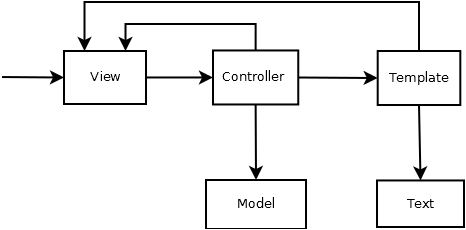
Within Chameleon, the View class plays a central role in request processing and response rendering.
The Text class acts as a language-aware repository for reusable text packages.
File structure
The project is organized into a clear directory structure:
- application/ contains application-specific controllers, models, libraries, texts, and views.
- config/ stores configuration files such as routing and environment settings.
- extern/ contains third-party packages used by the framework.
- library/ contains the framework core, including bootstrap and shared runtime classes.
- public/ is the web root and holds public assets such as CSS, JavaScript, and images.
- schema/ defines database schemas used to generate table structures.
- scripts/ provides maintenance and utility scripts, including database setup tools.
- tmp/ is reserved for cache and other temporary runtime data.
In day-to-day development, you will spend most of your time inside application/ and public/.
Core capabilities
Chameleon Framework is designed to reduce repetitive work in common development tasks. It includes helpers for:
- data type handling and formatting,
- HTML generation for forms, tables, links, and other UI elements,
- request, session, and validation workflows,
- database access and query building,
- language-specific text packages separated from templates,
- template directives and an HTML-aware parser,
- additional services such as email handling, storage helpers, and shopping-cart functionality.
Extensions
The framework also supports reusable extensions that accelerate delivery of both front-end and back-end features.
Examples include pop-up windows, paging components, gallery tools, and administrative generators for managing content and settings.
Updates and maintenance
The administrative tooling includes support for updating framework libraries and selected extensions from a central source,
helping keep installations aligned with the latest available version.
Chameleon Framework © 2012 - 2026

